
Umatilla Projected Versus Actual Release
A projected date is an estimate based on the sentence information and rules known to the custodian. It is not a certificate that release happened. ODOC can change its estimate after a corrected judgment, new credit, discipline decision, release-plan issue, Board action, or legal hold. County jail staff may also need to reconcile several local cases before stating a sentence end.
An actual release is a custody transaction. It records when the person left a facility and why. The destination matters. Transfer from the Umatilla County Corrections Facility to ODOC is not release into the community. Movement between Eastern Oregon Correctional Institution and Two Rivers Correctional Institution is still ODOC custody. A court order supplies legal authority, but the custodian’s movement entry confirms execution.
Pretrial detention works differently. A person awaiting disposition may leave after a court order or qualifying security release, yet no fixed sentence date exists. A pending charge, warrant, detainer, or separate case may block release even after one matter changes.
Note: A projected date estimates a future event; the custodian's later movement record confirms what actually occurred.
Umatilla ODOC Earliest Release Date
The Oregon Department of Corrections Offender Search uses the exact label Earliest Release Date on an individual detail page. Its tooltip describes a displayed date as the earliest estimated release date, subject to many factors and change. The field can show PENDING while sentence calculations are underway. Replacing that wording with “guaranteed,” “scheduled,” or “final” would overstate the record.
Read the date with Status, Location, Institution Admission Date, and SID. The page can also list aliases, physical descriptors, a DOC photograph, court name, and offense details such as case number, county, sentence date, active or inactive state, and sentence type. These fields help make sure the correct person and sentence are being reviewed.
| OOS field | Why it matters |
|---|---|
| SID | Separates records that share a name. |
| Status | Shows the current ODOC or county-supervision context that OOS reports. |
| Location | Distinguishes prison placement from a county supervision location. |
| Institution Admission Date | Provides context for the current ODOC period. |
| Earliest Release Date | Shows ODOC’s earliest estimate or PENDING while work continues. |
| Offense details | Connect the estimate to the relevant court, case, and sentence. |
The successful manifest capture comes from the official ODOC Offender Search source.
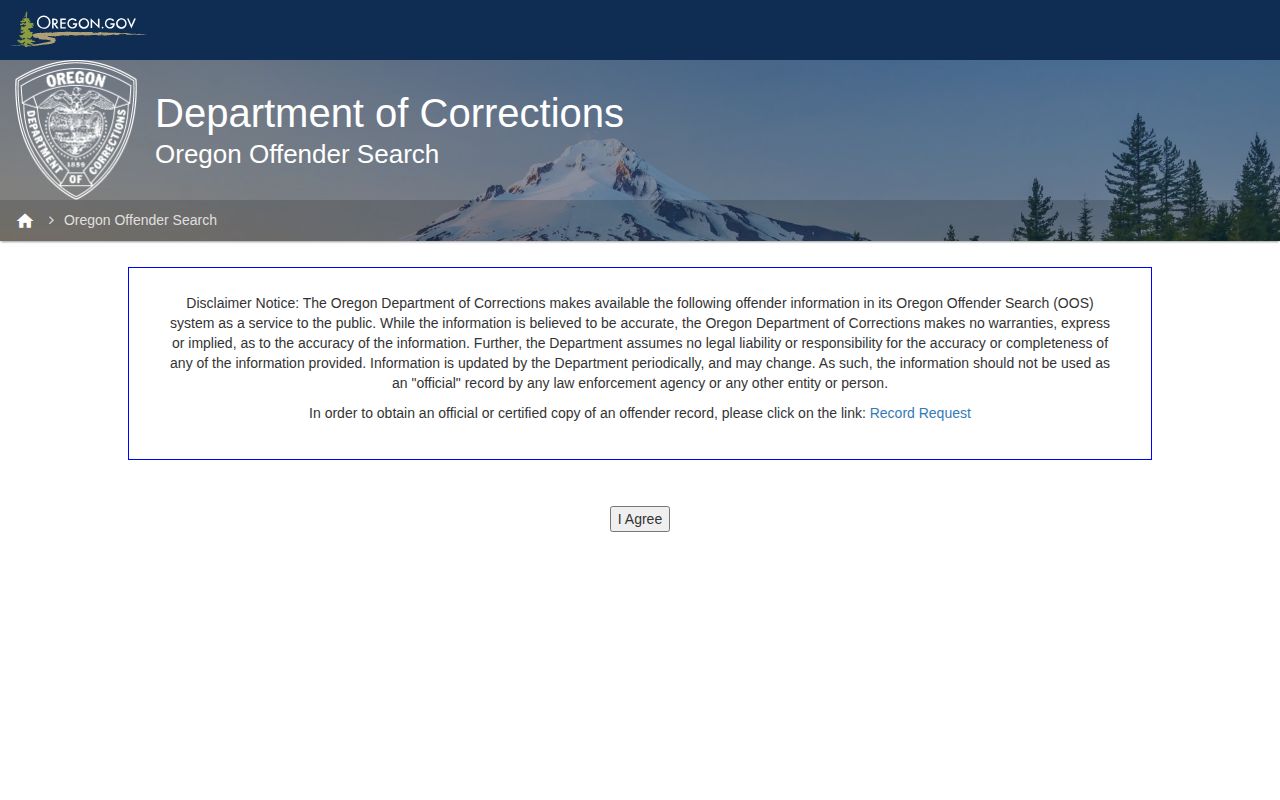
The captured search route leads to the individual detail where the estimate must be read with current status, location, and sentence identifiers.
Find Umatilla Inmate Release Dates
Classify the custody before searching. ODOC controls sentences served at EOCI and TRCI. The Umatilla County Sheriff controls county jail custody entries, while the sentencing court supplies the judgment. A federal sentence belongs to the Bureau of Prisons. Using the county roster for a state prisoner or OOS for a short local booking produces false negatives.
- Identify the current custodian and collect the full name, booking number, SID, and case number when known.
- For an Oregon prison sentence, accept the OOS notice, search by SID or name, and open the individual detail.
- Read Status, Location, Institution Admission Date, and Earliest Release Date together. Treat PENDING as unfinished calculation.
- Compare the offense details with the court judgment, including sentence date and concurrent or consecutive terms.
- For a county sentence, ask the jail and court for the controlling sentence, credit, authorized deductions, and holds.
- After the estimated date, confirm the movement through OOS status, VISOR, and the relevant release or discharge record.
For county jail records, jail reception is 541-966-3632 and the Sheriff’s official public-record portal accepts focused requests. Ask for the booking and release dates, sentence calculation or custody history that may be disclosed, release authority, and any receiving agency. The judgment and later orders can be checked through the Sixth Judicial District Umatilla County court page.
The Umatilla County released-inmate record route covers the exact proof chain when the person has already left the roster.
Umatilla ODOC Earned-Time Rules
Oregon does not have a blanket rule that every person serves 85 percent. Modern earned time rests in ORS 421.121. For an eligible felony committed on or after November 1, 1989, the law ties reductions to appropriate institutional behavior and participation in adult basic skills development. It caps credits at 20 percent of total DOC incarceration and says credit cannot reduce actual prison confinement below six months.
Eligibility exclusions are crucial. ORS 421.121 excludes sentences governed by ORS 137.635, 137.700, 137.707, 163.105, 163.107, and 163.115. ODOC rules govern granting, retracting, and restoring credit. Thus a fully eligible sentence may be reduced by up to 20 percent, while an excluded mandatory term may receive no ordinary earned-time reduction. Neither result is an 85-percent formula.
An older framework under ORS 421.120 applies to qualifying felonies committed before November 1, 1989. It includes historic conduct and work or education deductions. The offense date decides which framework may apply. An old formula cannot be imported into a modern Umatilla County sentence just because OOS shows an early date.
Never calculate a person’s release by subtracting a flat percentage from the pronounced term. Start with the signed judgment. Identify all counts and cases, concurrent or consecutive structure, credit for time served, statutory exclusions, and ODOC’s current computation.
Umatilla Mandatory Release Terms
ORS 137.700 governs Measure 11 mandatory minimums. The listed minimum generally must be served without reduction under ORS 421.121 or another reduction based on that minimum, subject to the complete statutory scheme and any offense-specific rule. ORS 137.635 likewise requires the full determinate sentence for specified repeat designated felonies and denies ordinary parole, leave, and earned-time reductions.
These statutes can require 100 percent of the controlling mandatory term. They do not support a rough 85-percent claim. A sentence may also contain more than one count, a separate case, or a term that begins after another. Only the judgment and agency computation show how those parts interact.
Parole eligibility is also sentence-specific. Older matrix cases, dangerous-offender laws, murder provisions, juvenile or second-look authority, and modern guideline sentences operate under different rules. A Board hearing can affect a projected parole date in a qualifying case, but the existence of a Board process does not turn every Oregon sentence into discretionary parole.
Umatilla County Jail Release Calculation
County jail deductions arise under different authority, including ORS 169.110, plus local custody credit and judgment terms. ODOC’s 20-percent earned-time cap should not be applied to a short Umatilla County Corrections Facility sentence. Ask the jail to identify the controlling sentence, credit for time served, authorized deductions, and other holds.
Concurrent sentences run at the same time. Consecutive sentences run one after another. A detainer is a hold or request from another authority. Even when the local sentence reaches its calculated end, a detainer may produce a transfer rather than a community release. An amended judgment or corrected jail credit can also alter the date.
Umatilla Community Corrections publishes a weekend reporting rule for probationers who serve jail first: report immediately after release, or Monday at 8 a.m. after a weekend release. That instruction controls the first supervision report. It does not establish a weekend-early-release law or change the jail’s sentence calculation.
No verified county source states a routine release hour, holiday adjustment, or standard physical exit. Public counter hours are not release hours. Obtain the current operational instruction from the official county jail page or jail reception.
Note: Community Corrections reporting instructions do not calculate, advance, or guarantee a Umatilla County jail release date.
Why Umatilla Release Dates Change
A future date can move for several lawful reasons. Some affect the sentence computation itself. Others affect whether the person can leave the facility for the planned destination. A changed estimate does not by itself prove error or misconduct.
| Factor | Possible effect | Best source |
|---|---|---|
| Amended judgment | Changes a term, count, or sentence structure | Court register and signed judgment |
| Jail credit correction | Moves the computed start or end point | Court order and custodian computation |
| Earned credit | May reduce eligible ODOC time within statutory limits | ODOC computation and ORS 421.121 |
| Credit loss or restoration | Can move the earliest estimate later or earlier | ODOC record under current rules |
| Consecutive case | Adds a term after another term ends | Judgments for every active case |
| Board action | May affirm, defer, postpone, or otherwise affect a qualifying date | Board order or Action Form |
| Detainer or release plan | May delay community placement or result in transfer | Custodian movement record and receiving agency |
OOS says its information updates periodically and is not an official record. PENDING should be left as PENDING until ODOC completes the work. Calling it “soon” or estimating from the sentence would invent a date the agency has not issued.
Note: A transfer date may end custody at one facility while the person remains confined under another authority.
Confirm Umatilla Actual Release Dates
On or after an estimated date, check the status and location again. For an ODOC case, compare OOS with the movement or discharge record. A county-supervision status can show that prison custody ended and field supervision began. OOS does not promise that every fully discharged former prisoner will remain searchable with a permanent “Released” or “Discharged” label, so a Pen Pack, discharge record, or Board action may be stronger proof.
Oregon VISOR can provide supported custody-event notices. The Umatilla County VINELink and VISOR check explains the current registration workflow. A notice is useful, but the contributing custodian’s record remains the source for exact release time and destination.
For a county jail case, pair the Sheriff release entry with the court order. If the entry names ODOC, another jail, USMS, or ICE as recipient, describe a transfer. For a prison sentence, compare the judgment, OOS detail, VISOR event, and ODOC record. That chain answers both legal authority and physical movement without turning an estimate into an accomplished release.
ORS 421.125 also provides Oregon-specific discharge duties concerning proper clothing and enumerated documents when ODOC discharges or paroles a person. The current statutory text controls the exact list. It applies to ODOC discharge or parole, not automatically to a short release handled only by the county jail.
If a projected date and judgment seem inconsistent, preserve both records before asking for review. A later amended judgment, credit correction, or active consecutive case may explain the difference. ODOC sentence-computation or records staff handle a state sentence, while the jail and sentencing court handle a local term. An estimate made from public fragments cannot replace that agency calculation.